A company rarely becomes complicated overnight.
It usually happens gradually.
In the beginning, a small team may rely on a few simple tools: an accounting system, a customer database, spreadsheets for tracking information, and processes that everyone understands.
Everything works well.
As the business grows, new needs appear.
A sales team introduces a CRM system. Operations adopts a tracking platform. Management wants better reports and visibility. Different teams find tools that help them work more efficiently.
Each decision makes sense at the time.
The business is improving.
But after several years, something unexpected happens.
The company has more technology than ever before — yet getting a complete picture of the business becomes harder.
Information exists, but it is spread across different systems. Reports take longer to prepare. Employees spend time moving data between applications. Teams create their own workarounds because systems do not always work together.
The problem is not that the company lacks technology.
The problem is that the technology has grown without enough connection.
When technology grows faster than the foundation
This is a common journey for growing organisations.
Technology usually develops alongside business needs. New systems are introduced to solve immediate challenges, but over time the overall environment can become increasingly complex.
A system that works well on its own may not work effectively as part of a larger operational ecosystem.
The result is a familiar situation:
A company has more systems, more information and more capabilities — but not necessarily more intelligence.
Management may have more reports than before, yet still spend hours trying to answer a simple question:
“What is actually happening in our business?”
This is where many organisations face challenges when they begin exploring automation, analytics or AI.
The issue is not always a lack of advanced technology.
Often, the foundation underneath has not evolved at the same pace.
At Leapa, we believe technology creates meaningful value when it improves the way organisations operate.
Intelligence Applied.
But intelligence does not begin by simply adding more technology.
It begins by creating an environment where technology, information and people can work together effectively.
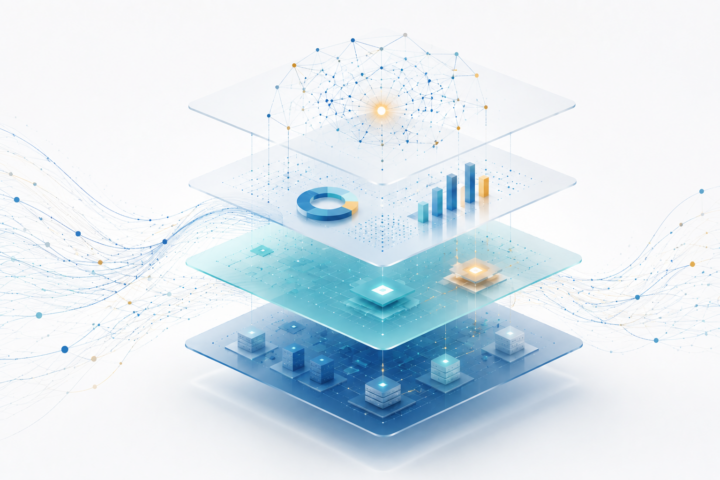
Intelligent systems require connected foundations
An intelligent operation is not built from a single tool or application.
It depends on several connected foundations.
Reliable infrastructure
Every digital system depends on a reliable foundation.
Connectivity, stability and performance may not always be visible, but they directly affect how organisations operate.
When the foundation is weak, problems appear in unexpected places.
A system may seem unreliable when the real issue exists somewhere deeper.
Connected systems
Intelligence requires information to move.
When systems operate separately, valuable information becomes trapped.
Connected systems allow organisations to reduce duplication, improve coordination and create better visibility across operations.
The goal is not simply to have more systems.
The goal is to make existing systems work together.
Useful data
Data is everywhere, but data alone does not create intelligence.
Information becomes valuable when it is accessible, meaningful and connected to business decisions.
More data does not automatically lead to better decisions.
The right information, available at the right time, creates better understanding.
Practical workflows
Technology should support the way people work.
The best systems do not simply introduce more features. They reduce unnecessary effort, remove friction and help people focus on higher-value activities.
A successful technology solution is not measured only by what it can do.
It is measured by how well it improves daily operations.
Modernisation is about evolution, not replacement
When organisations consider improving their technology environment, the first instinct is often to replace existing systems.
Sometimes replacement is necessary.
However, many organisations already have valuable technology investments, operational knowledge and established workflows.
The better question is often:
How can we make what we already have work better together?
A practical approach begins with understanding:
-
What systems are already in place?
-
How does information move through the organisation?
-
Where are the bottlenecks?
-
Which improvements would create the greatest operational value?
Modernisation is not always about starting again.
It is about understanding what exists, strengthening the foundation, and building towards what comes next.
Building the foundation for intelligent operations
The organisations that benefit most from intelligent technologies will not necessarily be those that adopt the newest tools first.
They will be those that understand their operations, strengthen their foundations and create better connections between technology, information and people.
AI, automation and analytics are powerful capabilities.
But their success depends on the systems underneath.
A strong foundation allows organisations to adopt new technologies with greater confidence, flexibility and long-term value.
At Leapa, we help organisations connect engineering expertise, intelligent systems, automation, data and practical AI to improve the way they operate.
Because the future of intelligent operations is not about having more technology.
It is about making technology work together.
Intelligence Applied.